Monday, April 30, 2018

Sleeping Beauty (1959 film)

Sleeping Beauty (1959)
src: ia.media-imdb.com

Sleeping Beauty is a 1959 American animated musical fantasy film produced by Walt Disney based on The Sleeping Beauty by Charles Perrault. The 16th Disney animated feature film, it was released to theaters on January 29, 1959, by Buena Vista Distribution. This was the last Disney adaptation of a fairy tale for some years because of its initial mixed critical reception and underperformance at the box office; the studio did not return to the genre until 30 years later, after Walt Disney died in 1966, with the release of The Little Mermaid (1989).

It features the voices of Mary Costa, Eleanor Audley, Verna Felton, Barbara Luddy, Barbara Jo Allen, Bill Shirley, Taylor Holmes, and Bill Thompson.

The film was directed by Les Clark, Eric Larson, and Wolfgang Reitherman, under the supervision of Clyde Geronimi, with additional story work by Joe Rinaldi, Winston Hibler, Bill Peet, Ted Sears, Ralph Wright, and Milt Banta. The film's musical score and songs, featuring the work of the Graunke Symphony Orchestra under the direction of George Bruns, are arrangements or adaptations of numbers from the 1890 Sleeping Beauty ballet by Pyotr Ilyich Tchaikovsky. However, unlike the previous feature-films, this was the first Disney feature-film that did not have the same background animation material, but instead with new background animation material.

Sleeping Beauty was the first animated film to be photographed in the Super Technirama 70 widescreen process, as well as the second full-length animated feature film to be filmed in anamorphic widescreen, following Disney's own Lady and the Tramp four years earlier. The film was presented in Super Technirama 70 and 6-channel stereophonic sound in first-run engagements.


Video Sleeping Beauty (1959 film)


Plot

After many childless years, King Stefan and Queen Leah happily welcome the birth of their daughter, the Princess Aurora. They proclaim a holiday for their subjects to pay homage to the princess, and at the gathering for her christening she is betrothed to Prince Phillip, the young son of Stefan's friend King Hubert, so that their kingdoms will always be united.

Among the guests are three fairies, Flora, Fauna, and Merryweather, who have come to bless the child with gifts. Flora and Fauna give their gifts of beauty and song, respectively. Before Merryweather is able to give her blessing, the evil fairy Maleficent appears, only to be told that she was not invited. Maleficent turns to leave, but when Queen Leah asks if she's offended, the evil fairy curses the princess, proclaiming that Aurora will grow in grace and beauty, but before the sun sets on her sixteenth birthday, she will use her finger to touch the spindle of a spinning wheel and die. King Stefan and Queen Leah are horrified and beg the fairies to break the curse. Unfortunately, they are not strong enough to break it, but Merryweather uses her blessing to soften the curse so that instead of dying, Aurora will fall into a deep sleep from which she can only be awakened by true love's kiss. King Stefan, still fearful for his daughter's life, orders all spinning wheels in the kingdom to be burned. The fairies do not believe that will be enough to keep Aurora safe, and so they spirit her away to a woodcutter's cottage in the forest until the day of her sixteenth birthday.

Years later, Aurora, renamed Briar Rose, has grown into a beautiful young woman. On the day of her sixteenth birthday, the three fairies ask Rose to gather berries in the forest so they can prepare a surprise party for her. Briar Rose befriends the animals of the forest and sings them a song, Once Upon a Dream. While singing in the forest, Briar Rose attracts the attention of Prince Phillip, now a handsome young man. He races to find the owner of the beautiful voice and is instantly struck by Rose's grace and beauty. Briar Rose at first is frightened at his sudden appearance, as she is not allowed to talk to strangers, but Philip soon puts her at ease. They instantly fall in love, unaware of being promised in marriage sixteen years ago. Briar Rose asks Phillip to come to her cottage that evening and meet her family.

Meanwhile, Flora and Merryweather argue over the color of Aurora's ballgown, which attracts the attention of Maleficent's raven and revealing the location of Aurora. Back at home, Briar Rose is thrilled to tell her guardians she met a man and fell in love. The fairies finally tell Aurora the truth about her royal heritage, that she is a princess and already betrothed at birth to a prince, and tell her she must never see the man she met again. Heartbroken, she leaves the room. Meanwhile, Phillip tells his father of a peasant girl he met and wishes to marry in spite of his prearranged marriage to Princess Aurora. King Hubert fails to convince him otherwise, leaving Hubert in equal disappointment.

Later that night, the fairies take Aurora back to the castle and leave her alone in a room to wait for her birthday celebrations where she will finally get to see her parents. Maleficent then appears and magically lures Aurora away from the fairies and tricks the princess into touching the spindle of an enchanted spinning wheel. Aurora pricks her finger, completing the curse. The good fairies place Aurora on a bed in the highest tower and place a powerful spell on all the people in the kingdom, causing them to fall asleep until the spell on their princess is broken. While doing so, they overhear a conversation between King Stefan and King Hubert. From King Hubert's conversation with King Stefan, the fairies realize that Prince Phillip is the man with whom Aurora has fallen in love. They rush to find him, but he is kidnapped by Maleficent who is waiting for him at the cottage in the woods. She shows Phillip the peasant girl he fell in love with is the now-sleeping princess. She tells him she plans to keep him locked away until he's an old man on the verge of death, then release him to meet his love, who will not have aged a single day.

The fairies find and release the prince, arming him with the magical Sword of Truth and the Shield of Virtue. Maleficent tries to stop Phillip by surrounding Aurora's castle with thorns, but fails. She then transforms into a gigantic dragon. Eventually, Phillip throws the sword, blessed by the fairies' magic, directly into Maleficent's heart, causing her to fall to her death.

Phillip awakens Aurora with a kiss, breaking the spell and thereby wakes everyone in the palace. The royal couple descends to the ballroom, where Aurora is happily reunited with her parents, while King Hubert is confused of how the two young royals met. Flora and Merryweather resume their argument over the color of Aurora's ball gown, magically changing it from blue to pink while the happy couple waltzes. The last color to appear is pink. Princess Aurora and Prince Phillip live happily ever after.


Maps Sleeping Beauty (1959 film)


Cast


Sleeping Beauty (1959)
src: ia.media-imdb.com


Directing animators

  • Marc Davis - (Princess Aurora, Maleficent)
  • Milt Kahl - (Prince Phillip)
  • Frank Thomas and Ollie Johnston - (The Three Good Fairies: Flora, Fauna, and Merryweather)
  • John Lounsbery - (King Hubert, King Stefan)

Eric Larson did not animate any of the characters for the film; instead, he directed the entire "Forest" sequence which stretches from Briar Rose (a.k.a. Aurora) wandering through the forest with her animal friends all the way to Princess Aurora renamed Briar Rose running back home, promising Phillip they will meet again later in the evening. This was the only time Larson directed a sequence or a film during his tenure at Walt Disney Productions.


Wool and Wheel: Sleeping Beauty {1959}
src: sceneshots.files.wordpress.com


Production

Story development

Following the critical and commercial success of Cinderella, writing for Sleeping Beauty began in early 1951. Partial story elements originated from discarded ideas for Snow White and the Seven Dwarfs including Maleficent's capture of Prince Philip and his dramatic escape from her fortress and Cinderella where a fantasy sequence featured the leading protagonists dancing on a cloud which was developed, but eventually dropped from the film. By the middle of 1953, director Wilfred Jackson had recorded the dialogue, assembled a story reel, and was to commence for preliminary animation work where Princess Aurora and Prince Phillip were to meet in the forest and dance, though Walt Disney decided to throw out the sequence delaying the film from its initial 1955 release date. For a number of months, Jackson, Ted Sears, and two story writers underwent a rewrite of the story, which received a lukewarm response from Disney. During the story rewriting process, the story writers felt the original fairy tale's second act felt bizarre and with the wake-up kiss serving as a climactic moment, they decided to concentrate on the first half finding strength in the romance. However, they felt little romance was developed between the strange prince and the princess that the storyboard artists worked out an elaborate sequence in which the king organized a treasure hunt. The idea was eventually dropped when it became too drawn out and drifted from the central storyline. Instead, it was written that Prince Phillip and Princess Aurora would meet in the forest by random chance while Princess Aurora renamed Briar Rose was conversing with the forest animals. Additionally, because the original Perrault tale had the curse last one hundred years, the writers decided to shorten it a few hours with the time spent for Prince Phillip to battle the goons, overcome several obstacles, and fight off against Maleficent transformed into a dragon.

The name given to the princess by her royal birth parents is "Aurora" (Latin for "dawn"), as it was in the original Tchaikovsky ballet. This name occurred in Charles Perrault's version as well, not as the princess's name, but as her daughter's. In hiding, she is called Briar Rose, the name of the princess in the Brothers Grimm's version variant. The prince was given the princely name most familiar to Americans in the 1950s: Prince Phillip. Named after Prince Philip, Duke of Edinburgh, the character has the distinction of being the first Disney prince to have a name as the two princes in Snow White and the Seven Dwarfs (The Prince) and Cinderella (Prince Charming) are never named.

In December 1953, Jackson suffered a heart attack, as a result of which directing animator Eric Larson of Disney's Nine Old Men took over as director. By April 1954, Sleeping Beauty was scheduled for a February 1957 release. With Larson as the director, Disney instructed Larson, whose unit would animate the forest sequence, that the picture was to be a "moving illustration, the ultimate in animation" and added that he did not care how long it would take. Because of the delays, the release date was again pushed back from Christmas 1957 to Christmas 1958. Fellow Nine Old Men Milt Kahl would blame Walt for the numerous release delays because "he wouldn't have story meetings. He wouldn't get the damn thing moving." Relatively late in production, Disney removed Larson as the supervising director and replaced him with Clyde Geronimi. Directing animator Wolfgang Reitherman would join Geronimi as sequence director over the climactic dragon battle sequence commenting that "We took the approach that we were going to kill that damned prince!". Les Clark, another member of the Nine Old Men, would serve as the sequence director of the elaborate opening scene where crowds of the citizens in the kingdom arrive at the palace for the presentation of Princess Aurora.

Art direction

Kay Neilsen-whose sketches were the basis for Night on Bald Mountain in Fantasia-was the first to produce styling sketches for the film in 1952. The artistic style originated when John Hench observed the famed unicorn tapestries at the Cloisters located at the Metropolitan Museum of Art in New York City. When Hench returned to the Disney studios, he brought reproductions of the tapestries and showed them to Walt Disney, who replied, "Yeah, we could use that style for Sleeping Beauty."

Eyvind Earle joined Walt Disney Productions in 1951 first employed as an assistant background painter for Peter Pan before being promoted as a full-fledged background painter in the Goofy cartoon, "For Whom the Bulls Toil" and the color stylist of the Academy Award-winning short, Toot, Whistle, Plunk and Boom. For Sleeping Beauty, Earle said he "felt totally free to put my own style" into the paintings he based on Hench's drawings stating "Where his trees might have curved, I straightened them out.... I took a Hench and took the same subject, and the composition he had, and just turned in into my style." Furthermore, Earle found inspiration in Italian Renaissance utilizing works from Albrecht Dürer, Pieter Bruegel, Nicolaas van Eyck, Sandro Botticelli, as well as Persian art and Japanese prints. When Geronimi became the supervising director, Earle and Geronimi entered furious creative differences. Geronimi commented that he felt Earle's paintings "lacked the mood in a lot of things. All that beautiful detail in the trees, the bark, and all that, that's all well and good, but who the hell's going to look at that? The backgrounds became more important than the animation. He'd made them more like Christmas cards." Earle left the Disney studios in March 1958, before Sleeping Beauty was completed, to take a job at John Sutherland Productions. As a result, Geronimi had Earle's background paintings softened and diluted from their distinctive medieval texture.

Animation

Live-action reference footage

Before the animation process began, a live-action reference version was filmed with live actors in costume serving as models for the animators in which Walt Disney insisted on because he wanted the characters to appear "as real as possible, near flesh-and-blood." However, Milt Kahl objected to this method, calling it "a crutch, a stifling of the creative effort. Anyone worth his salt in this business ought to know how people move." Helene Stanley was the live action reference for Princess Aurora. The only known surviving footage of Stanley as Aurora's live-action reference is a clip from the television program Disneyland, which consists of the artists sketching her dancing with the woodland animals. Stanley previously provided live-action references for Cinderella and later for Anita from 101 Dalmatians, and portrayed Polly Crockett for the TV series Davy Crockett, King of the Wild Frontier.

The role of Prince Phillip was modeled by Ed Kemmer, who had played Commander Buzz Corry on television's Space Patrol five years before Sleeping Beauty was released. For the final battle sequence, Kemmer was photographed on a wooden buck. The live-action model for Maleficent was Eleanor Audley, who also voiced the villain. Dancer Jane Fowler also was a live-action reference for Maleficent. Among the actresses who performed in reference footage for this film were Spring Byington and Frances Bavier.

Character animation

Because of the artistic depth of Earle's backgrounds, it was decided for the characters to be stylized so they could appropriately match the backgrounds. While the layout artists and animators were impressed with Earles's paintings, they eventually grew depressed at working with a style that many of them regarded as too cold, too flat, and too modernist for a fairy tale. Nevertheless, Walt insisted on the visual design claiming that the inspirational art he commissioned in the past had homogenized the animators. Frank Thomas would complain to Ken Peterson, head of the animation department, of Earles's "very rigid design" because of the inhibiting effect on the animators that was less problematic than working with Mary Blair's designs, in which Peterson would respond that the design style was Walt's decision, and that, like it or not, they had to use it. Because of this, Thomas developed a red blotch on his face and had to visit the doctor each week to have it attended to. Production designer Ken Anderson also complained: "I had to fight myself to make myself draw that way." Another character animator on Aurora claimed their unit was so cautious about the drawings that the clean-up animators produced one drawing a day, which translated into one second of screen time per month.

Meanwhile, Tom Oreb was tasked as character stylist that would not only inhabit the style of the backgrounds, but also fit with the contemporary UPA style. Likewise with Earle's background styling, the animators complained that the character designs were too rigid to animate. For Maleficent, Marc Davis drew from Czechoslovakian religious paintings and used "the red and black drapery in the back that looked like flames that I thought would be great to use. I took the idea of the collar partly from a bat, and the horns looked like a devil." However, in an act of artistic compromise, Earle, with final approval on the character designs, requested the change to lavender as red would come off too strong, which Davis agreed to. In addition, Davis served as directing animator over the title character with the character's figure and features based on those of Audrey Hepburn as well as her voice actress, Mary Costa.

Veteran animators Frank Thomas and Ollie Johnston were assigned as directing animators over the three good fairies: Flora, Fauna and Merryweather. Walt Disney urged for the fairies to be more homogeneous, which Thomas and Johnston objected to, with Thomas stating they "thought 'that's not going to be any fun'. So we started figuring the other way and worked on how we could develop them into special personalities." John Lounsbery would animate the "Skumps" sequence between Kings Hubert and Stefan. Chuck Jones, known for his work as an animation director with Warner Bros. Cartoons, was employed on the film for four months during its early conceptual stages when Warner Bros. Cartoons was closed when it was anticipated that 3-D film would replace animation as a box office draw. Following the failure of 3-D, and the reversal of Warner's decision, Jones returned to the other studio. His work on Sleeping Beauty, which he spent four months on, remained uncredited. Ironically, during his early years at Warner Bros., Jones was a heavy user of Disney-style animation until Tex Avery got Warner out of the Disney style. Another notable Animator who worked on the film for part of it's production was Don Bluth, who worked as an assistant animator to John Lounsberry, Bluth would leave after two years but eventually came back in the 1970s.

Casting

In 1952, Mary Costa was invited to a dinner party where she sang "When I Fall in Love" at the then-named Los Angeles Conservatory of Music. Following the performance, she was approached by Walter Schumann who told her, "I don't want to shock you, but I've been looking (for Aurora) for three years, and I want to set up an audition. Would you do it?" Costa accepted the offer, and at her audition in the recording booth with George Bruns, she was asked to sing and do a bird call, which she did initially in her Southern accent until she was advised to do an English accent. The next day, she was informed by Walt Disney that she landed the role. Eleanor Audley initially turned down the choice role of Maleficent as she was battling tuberculosis at the time, but reconsidered.


Eyvind Earle Original Disney Production Backgrounds
src: www.stanstock.com


Music

In April 1952, Billboard reported that Jack Lawrence and Sammy Fain had signed to compose the score. Walter Schumann was originally slated to be the film composer, but left the project because of creative differences with Walt Disney. George Bruns was recommended to replace Schumannn by animator Ward Kimball. Because of a musicians' strike in 1957, the musical score was recorded in Berlin, Germany.

Track list:

  1. "Main Title"/"Once Upon a Dream"/"Prologue"
  2. "Hail to the Princess Aurora"
  3. "The Gifts of Beauty and Song"/"Maleficent Appears"/"True Love Conquers All"
  4. "The Burning of the Spinning Wheels"/"The Fairies' Plan"
  5. "Maleficent's Frustration"
  6. "A Cottage in the Woods"
  7. "Do You Hear That?"/"I Wonder"
  8. "An Unusual Prince"/"Once Upon a Dream (Reprise)"
  9. "Magical House Cleaning"/"Blue or Pink"
  10. "A Secret Revealed"
  11. "Wine (Drinking Song)"/"The Royal Argument"
  12. "Prince Phillip Arrives"/"How to Tell Stefan"
  13. "Aurora's Return"/"Maleficent's Evil Spell"
  14. "Poor Aurora"/"Sleeping Beauty"
  15. "Forbidden Mountain"
  16. "A Fairy Tale Come True"
  17. "Battle with the Forces of Evil"
  18. "Awakening"
  19. "Finale (Once Upon a Dream (third-prise))"

The Classic Disney: 60 Years of Musical Magic album includes "Once Upon a Dream" on the green disc, and "I Wonder" on the purple disc. Additionally, Disney's Greatest Hits includes "Once Upon a Dream" on the blue disc. The 1973 LP compilation 50 Happy Years of Disney Favorites (Disneyland, STER-3513) includes "Once Upon a Dream" as the seventh track on Side IV, as well as a track titled "Blue Bird - I Wonder" labeled as being from this film with authorship by Hibler, Sears, and Bruns (same set, Side II, track 4).

Although Bruns took much credit for the score, he derived most of his work from the themes and melodies in Tchaikovsky's ballet Sleeping Beauty.

No Secrets performed a cover version of "Once Upon a Dream" on the album Disneymania 2, which appears as a music video on the 2003 DVD. More recently, Emily Osment sang a remake of "Once Upon a Dream", released on the Disney Channel on September 12, 2008, and included on the Platinum Edition DVD and Blu-ray Disc.

In the 2012 album Disney - Koe no Oujisama, which features various Japanese voice actors covering Disney songs, "Once Upon a Dream" was covered by Toshiyuki Morikawa.

In anticipation of the 2014 film Maleficent, a cover version sung by Lana Del Rey was released by Disney on January 26. The song is considerably darker and more dramatic than the 1959 version, given the new film's focus on the villain Maleficent. The song was debuted in a trailer for the film shown as a commercial break during the 2014 Grammy Awards, and was released for free on Google Play for a limited time.


Sleeping Beauty Ending Scene HQ (with alternate music) - YouTube
src: i.ytimg.com


Release

Original theatrical run

Disney's distribution arm, Buena Vista Distribution, originally released Sleeping Beauty to theaters in both standard 35mm prints and large-format 70mm prints. The Super Technirama 70 prints were equipped with six-track stereophonic sound; some CinemaScope-compatible 35mm Technirama prints were released in four-track stereo, and others had monaural soundtracks. On the initial run, Sleeping Beauty was paired with the short musical/documentary film Grand Canyon which won an Academy Award.

During its original release in January 1959, Sleeping Beauty grossed approximately $5.3 million in theater rentals (the distributor's share of the box office gross). Sleeping Beauty's production costs, which totaled $6 million, made it the most expensive Disney film up to that point, and over twice as expensive as each of the preceding three Disney animated features: Alice in Wonderland, Peter Pan, and Lady and the Tramp. The high production costs of Sleeping Beauty, coupled with the underperformance of much of the rest of Disney's 1959-1960 release slate, resulted in the company posting its first annual loss in a decade for fiscal year 1960, and there were massive lay-offs throughout the animation department.

Re-releases

Like Alice in Wonderland (1951), which was not initially successful either, Sleeping Beauty was never re-released theatrically in Walt Disney's lifetime. However, it had many re-releases in theaters over the decades. The film was re-released theatrically in 1970, where it was released on standard 35mm film. The release garnered $3.8 million. It was re-released in 1979 in 70mm 6 channel stereo, as well as in 35 mm stereo and mono, 1986, and 1995. It was originally going to be re-released in 1993 (as was advertised on the 1992 VHS release of Beauty and the Beast) but it was cancelled and pushed forward two years later to 1995. Sleeping Beauty's successful reissues have made it the second most successful film released in 1959, second to Ben-Hur, with a lifetime gross of $51.6 million. When adjusted for ticket price inflation, the domestic total gross comes out to $623.56 million, placing it in the top 40 of films.

From July 9 to August 13, 2012, the Academy of Motion Picture Arts and Sciences organized "The Last 70MM Film Festival" at the Samuel Goldwyn Theater, where the Academy, its members, and the Hollywood industry acknowledged the importance, beauty, and majesty of the 70mm film format and how its image and quality is superior to that of digital film. The Academy selected the following films, which were shot on 70mm, to be screened to make a statement about it, as well as to gain a new appreciation for familiar films in a way it hadn't before: It's a Mad, Mad, Mad, Mad World, Sleeping Beauty, Grand Prix, The Sound of Music, 2001: A Space Odyssey, and Spartacus, along with other short subject films on the 70mm format. A screening of the final remaining 70mm print of this film was included in the 70mm & Widescreen Film Festival at the Somerville Theatre, September 18, 2016.

Critical reaction

Upon its initial release, Sleeping Beauty received mixed to positive reviews from film critics. Bosley Crowther, writing in his review for The New York Times, complimented that "the colors are rich, the sounds are luscious and magic sparkles spurt charmingly from wands", but criticized its familiarity with Snow White and the Seven Dwarfs. He further wrote that "the princess looks so much like Snow White they could be a couple of Miss Rheingolds separated by three or four years. And she has the same magical rapport with the little creatures of the woods. The witch is the same slant-eyed Circe who worked her evil on Snow White. And the three good fairies could be maiden sisters of the misogynistic seven dwarfs." Variety praised the singing voices of Mary Costa and Bill Shirley and noted that "some of the best parts of the picture are those dealing with the three good fairies, spoken and sung by Verna Felton, Barbara Jo Allen and Barbara Luddy." The New York Daily News described the film as "enchanting".

Nevertheless, the film has sustained a strong following and is today hailed as one of the best animated films ever made, thanks to its stylized designs by painter Eyvind Earle who also was the art director for the film, its lush music score, the character of Maleficent (whose popularity led her to be the flagship villain for the Disney Villains franchise) and its large-format 70mm widescreen and stereophonic sound presentation. Rotten Tomatoes gave the film a "Certified Fresh" 92% from 38 reviews with an average rating of 8.2/10. Its consensus states that "This Disney dreamscape contains moments of grandeur, with its lush colors, magical air, one of the most menacing villains in the Disney canon." Carrie R. Wheadon of Common Sense Media gave the film five out of five stars, writing, "Disney classic is delightful but sometimes scary".

Awards and honors

Academy Awards

  • Best Scoring of a Musical Picture (George Bruns) (Lost against Porgy and Bess)

Grammy Awards

  • Best Soundtrack Album, Original Cast - Motion Picture or Television (Lost against Porgy and Bess)

Young Artist Award

  • Best Musical Entertainment Featuring Youth - TV or Motion Picture (Lost against Nutcracker Fantasy)

Other honors

The film is recognized by American Film Institute in these lists:

  • 2003: AFI's 100 Years...100 Heroes & Villains:
    • Maleficent - Nominated Villain
  • 2006: AFI's Greatest Movie Musicals - Nominated
  • 2008: AFI's 10 Top 10:
    • Nominated Animation Film

Home media

Sleeping Beauty was released on VHS, Betamax, and Laserdisc on October 14, 1986 in the Classics collection, becoming the first Disney Classics video to be digitally processed in Hi-Fi stereo. During its 1986 VHS release, it sold over a million copies. The film underwent a digital restoration in 1997, and that version was released to both VHS and Laserdisc in widescreen as part of the Masterpiece Collection. The 1997 VHS edition also came with a special commemorative booklet included, with brief facts on the making of the movie. In 2003, the restored Sleeping Beauty was released to DVD in a 2-disc "Special Edition" which included both a widescreen version (formatted at 2.35:1) and a pan and scan version as well. Its DVD supplements included the making-of featurette from the 1997 VHS, Grand Canyon, the Life of Tchaikovsky segment of The Peter Tchaikovsky Story from the Walt Disney anthology television series, a virtual gallery of concept art, layout and background designs, three trailers, and audio commentary from Mary Costa, Eyvind Earle, and Ollie Johnston.

A Platinum Edition release of Sleeping Beauty, as a 2-disc DVD and Blu-ray, was released on October 7, 2008 in the US, making Sleeping Beauty the first entry in the Platinum Edition line to be released in high definition video. This release is based upon the 2007 restoration of Sleeping Beauty from the original Technicolor negatives (interpositives several generations removed from the original negative were used for other home video releases). The new restoration features the film in its full negative aspect ratio of 2.55:1, wider than both the prints shown at the film's original limited Technirama engagements in 2.20:1 and the CinemaScope-compatible reduction prints for general release at 2.35:1. The Blu-ray set features BD-Live, an online feature, and the extras include a virtual castle and multi-player games. The Blu-ray release also includes disc 1 of the DVD version of the film in addition to the two Blu-rays. The DVD includes a music video with a remake of the Disney Classic "Once Upon A Dream" sung by Emily Osment; and featuring Daniel Romer as Prince Charming. The DVD was released on October 27, 2008 in the UK. The Blu-ray release is the first ever released on the Blu-ray format of any Disney feature produced by Walt Disney himself. The film was released on a Diamond Edition Blu-ray, DVD, and Digital HD on October 7, 2014, after six years since its first time on Blu-ray.


Flatness and Depth: Classic Disney's Medieval Vision ...
src: www.medievalists.net


Legacy

Video games

Aurora is one of the seven Princesses of Heart in the popular Square Enix game Kingdom Hearts (although her appearances are brief), and Maleficent is a villain in all three Kingdom Hearts games, and as a brief ally at the third game's climax. The good fairies appear in Kingdom Hearts II, giving Sora new clothes. Diablo appears in Kingdom Hearts II to resurrect his defeated mistress. The PSP game Kingdom Hearts Birth by Sleep features a world based on the movie, Enchanted Dominion, and characters who appear are Princess Aurora/Briar Rose, Maleficent, Maleficent's goons, the three faires and Prince Phillip, the latter serving as temporary party member for Aqua during her battle against Maleficent and her henchmen. Maleficent will return in Kingdom Hearts III.

Aurora is also a playable character in the game Disney Princess.

Board game

Walt Disney's Sleeping Beauty Game (1958) is a Parker Brothers children's board game for two to four players based upon Sleeping Beauty. The object of the game is to be the first player holding three different picture cards to reach the castle and the space marked "The End".

The Disney film retains the basics of Charles Perrault's 17th-century fairy tale about a princess cursed to sleep one hundred years, but adds three elderly fairies who protect the princess, a prince armed with a magic sword and shield, and other details. The Disney twists on the tale are incorporated into the game, and Disney's "stunning graphics" illustrate the game board. In addition to the board game, the film generated books, toys, and other juvenile merchandise.

The equipment consists of a center-seamed game board, four tokens in various colors, four spinners, four magic wands, and a deck of picture cards.

The first player moves the number of spaces along the track according to a dial spin. If the player lands on a pink star, his turn ends. If he lands on a yellow star, he draws a card and follows its instruction. If he draws a picture card, he retains it face down at his place. If a player spins a six, he is given the choice of moving six spaces or taking a magic wand. He may play the wand at any time during the game and in doing so draws two cards, following their instructions. A player must hold three different picture cards before entering the Path of Happiness. If he does not hold three picture cards, he continues around the Deep Sleep circle until he acquires the required three picture cards. Should a player land on a purple Maleficent space, that player returns one of his picture cards to the deck.

Theme parks

Sleeping Beauty was made while Walt Disney was building Disneyland (hence the six-year production time). To help promote the film, Imagineers named the park's icon "Sleeping Beauty Castle" (it was originally to be Snow White's). An indoor walk-through exhibit was added to the empty castle interior in 1957, where guests could walk through the castle, up and over the castle entrance, viewing "Story Moment" dioramas of scenes from the film, which were improved with animated figurines in 1977. It closed shortly after the September 11, 2001 attacks, supposedly because the dark, unmonitored corridors were a risk. After being closed for seven years, the exhibit space underwent extensive refurbishment to restore the original 1957 displays, and reopened to guests on November 27, 2008. Accommodations were also made on the ground floor with a "virtual" version for disabled guests unable to navigate stairs. Hong Kong Disneyland opened in 2005, also with a Sleeping Beauty Castle, nearly replicating Disneyland's original design.

Le Château de la Belle au Bois Dormant at Disneyland Paris is a variant of Sleeping Beauty Castle. The version found at Disneyland Paris is much more reminiscent of the film's artistic direction. The Château features an animatronic dragon, imagineered to look like Maleficent's dragon form, is found in the lower level dungeon - La Tanière du Dragon. The building also contains La Galerie de la Belle au Bois Dormant, a gallery of displays which illustrate the story of Sleeping Beauty in tapestries, stained glass windows and figures.

Princess Aurora (and, to a lesser extent, Prince Phillip, the three good fairies, and Maleficent) makes regular appearances in the parks and parades.

Maleficent is featured as one of the villains in the nighttime show Fantasmic! at Disneyland and Disney's Hollywood Studios.

Other appearances

Maleficent's goons appear in the Maroon Cartoon studio lot in the film Who Framed Roger Rabbit. The Bluebirds from the film also appear as "tweeting birds" that fly around Roger Rabbit's or Eddie Valiant's heads in two scenes, after a refrigerator fell on top of Roger's head and while Eddie Valiant is in Toontown, the birds are seen again flying around his head until he shoos them away.

Princess Aurora, Prince Phillip, Flora, Fauna and Merryweather were featured as guests in Disney's House of Mouse and Maleficent was one of the villains in Mickey's House of Villains. The first all-new story featuring the characters from the movie (sans Maleficent) appeared in Disney Princess Enchanted Tales: Follow Your Dreams, the first volume of collection of the Disney Princesses. It was released on September 4, 2007. Mary Costa, the original voice of Princess Aurora, was not fond of this story and felt that it did not work.

In the American fantasy drama series Once Upon a Time, a live-action version of Maleficent appeared in the second episode and the Season 1 finale, as she is an adversary of the Evil Queen, and is also sinister. She appears more prominently in the show's fourth season. Her role is played by True Blood actress Kristin Bauer. In Season 2, Season 3, and Season 4 live-action incarnations of Princess Aurora, Prince Phillip, and King Stefan are portrayed by Sarah Bolger, Julian Morris, and Sebastian Roché respectively.

Flora, Fauna and Merryweather appear in Disney Channel/Disney Junior's series Sofia the First as the teaching faculty of Royal Prep, the school for the various kingdom's princes and princesses. Princess Aurora also makes a guest appearance in the episode, "Holiday in Enchancia".

Stage adaptation

A scaled-down one act stage musical version of the film with the title Disney's Sleeping Beauty KIDS is often performed by schools and children's theaters. With book and additional lyrics by Marcy Heisler and Bryan Louiselle, the show is composed of twelve musical numbers, including the movie songs.

Live-action film adaptation

In Walt Disney Pictures' live action adaption Maleficent, released in May 2014, Angelina Jolie plays the role of Maleficent and Elle Fanning plays Princess Aurora. The movie was directed by Robert Stromberg in his directorial debut, produced by Don Hahn and Joe Roth, and written by Linda Woolverton.


REWIND: Sleeping Beauty (1959) - Movie Review - Second Union
src: wearesecondunion.com


See also

  • Medieval fantasy
  • List of Disney animated films based on fairy tales
  • List of American films of 1959
  • Sleeping Beauty Castle

Sleeping Beauty (1959) vs Maleficent (2014) [similarities] - YouTube
src: i.ytimg.com


References


Disney's Sleeping Beauty (1959) | Christina Wehner
src: christinawehner.files.wordpress.com


Bibliography


PRINCESS AURORA & MALEFICENT SLEEPING BEAUTY (1959 Stock Photo ...
src: c7.alamy.com


External links

  • Official website
  • Sleeping Beauty at AllMovie
  • Sleeping Beauty at The Big Cartoon DataBase
  • Sleeping Beauty on IMDb
  • Sleeping Beauty at the TCM Movie Database
  • Sleeping Beauty at Rotten Tomatoes
  • Sleeping Beauty at Box Office Mojo

Source of the article : Wikipedia
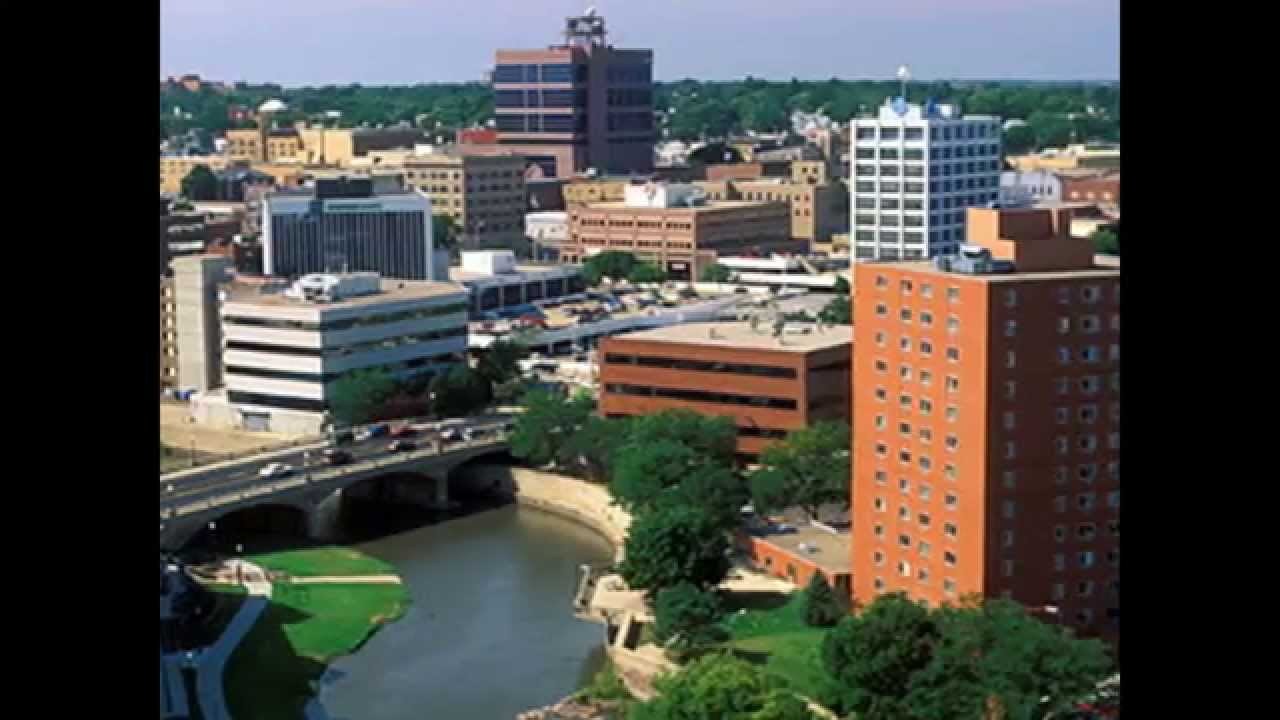
Sioux Falls, South Dakota

SIOUX FALLS , SOUTH DAKOTA - YouTube
src: i.ytimg.com

Sioux Falls () (Lakota: Í?ya? Okáble?a Ot?ú?wahe; "Stone Shatter City") is the most populous city in the U.S. state of South Dakota and the 145th-most populous city in the United States. It is the county seat of Minnehaha County. and also extends into Lincoln County to the south. It is the 47th-fastest-growing city in the United States and the fastest-growing metro area in South Dakota, with a population increase of 22% between 2000 and 2010.

As of 2018, Sioux Falls had an estimated population of 183,200. The metropolitan population of 251,854 accounts for 29% of South Dakota's population. It is also the primary city of the Sioux Falls-Sioux City Designated Market Area (DMA), a larger media market region that covers parts of four states and has a population of 1,043,450. Chartered in 1856 on the banks of the Big Sioux River, the city is situated in the rolling hills at the junction of Interstate 90 and Interstate 29.


Video Sioux Falls, South Dakota


History

The history of Sioux Falls revolves around the cascades of the Big Sioux River. The falls were created about 14,000 years ago during the last ice age. The lure of the falls has been a powerful influence. Ho-Chunk, Ioway, Otoe, Missouri, Omaha (and Ponca at the time), Quapaw, Kansa, Osage, Arikira, Dakota, and Cheyenne people inhabited and settled the region previous to Europeans and European descendants. Numerous burial mounds still exist on the high bluffs near the river and are spread throughout the general vicinity. Indigenous people maintained an agricultural society with fortified villages, and the later arrivals rebuilt on many of the same sites that were previously settled. Lakota populate urban and reservation communities in the contemporary state and many Lakota, Dakota, and numerous other Indigenous Americans reside in Sioux Falls today.

French voyagers/explorers visited the area in the early 18th century. The first documented visit by an American (of European descent) was by Philander Prescott, who camped overnight at the falls in December 1832. Captain James Allen led a military expedition out of Fort Des Moines in 1844. Jacob Ferris described the Falls in his 1856 book "The States and Territories of the Great West".

Two separate groups, the Dakota Land Company of St. Paul and the Western Town Company of Dubuque, Iowa organized in 1856 to claim the land around the falls, considered a promising townsite for its beauty and water power. Each laid out 320-acre (1.3 km2) claims, but worked together for mutual protection. They built a temporary barricade of turf which they dubbed "Fort Sod", in response to hostilities threatened by native tribes. Seventeen men then spent "the first winter" in Sioux Falls. The following year the population grew to near 40.

Although conflicts in Minnehaha County between Native Americans and white settlers were few, the Dakota War of 1862 engulfed nearby southwestern Minnesota. The town was evacuated in August of that year when two local settlers were killed as a result of the conflict. The settlers and soldiers stationed here traveled to Yankton in late August 1862. The abandoned townsite was pillaged and burned.

Fort Dakota, a military reservation established in present-day downtown, was established in May 1865. Many former settlers gradually returned and a new wave of settlers arrived in the following years. The population grew to 593 by 1873, and a building boom was underway in that year. The Village of Sioux Falls, consisting of 1,200 acres (4.9 km2), was incorporated in 1876 and was granted a city charter by the Dakota Territorial legislature on March 3, 1883.

The arrival of the railroads ushered in the great Dakota Boom decade of the 1880s. The population of Sioux Falls mushroomed from 2,164 in 1880 to 10,167 at the close of the decade. The growth transformed the city. A severe plague of grasshoppers and a national depression halted the boom by the early 1890s. The city grew by only 89 people from 1890 to 1900.

But prosperity eventually returned with the opening of the John Morrell meat packing plant in 1909, the establishment of an airbase and a military radio and communications training school in 1942, and the completion of the interstate highways in the early 1960s. Much of the growth in the first part of the 20th century was fueled by agriculturally based industry, such as the Morrell plant and the nearby stockyards (one of the largest in the nation).

In 1955 the city decided to consolidate the neighboring incorporated city of South Sioux Falls. At the time South Sioux Falls had a population of nearly 1,600 inhabitants, according to the 1950 census. It was third largest city in the county after Sioux Falls and Dell Rapids. By October 18, 1955 South Sioux Falls residents voted 704 in favor and 227 against to consolidate with Sioux Falls. On the same issue, Sioux Falls residents voted on November 15 by the vote 2,714 in favor and 450 against.

In 1981, to take advantage of recently relaxed state usury laws, Citibank relocated its primary credit card center from New York City to Sioux Falls. Some claim that this event was the primary impetus for the increased population and job growth rates that Sioux Falls has experienced over the past quarter century. Others point out that Citibank's relocation was only part of a more general transformation of the city's economy from an industrially based one to an economy centered on health care, finance and retail trade.

Sioux Falls has grown at a rapid pace since the late 1970s, with the city's population increasing from 81,000 in 1980 to 153,888 in 2010.


Maps Sioux Falls, South Dakota


Geography

Sioux Falls is located at 43°32'11" North, 96°43'54" West (43.536285, -96.731780). According to the United States Census Bureau, the city has a total area of 73.47 square miles (190.29 km2), of which, 72.96 square miles (188.97 km2) is land and 0.51 square miles (1.32 km2) is water. The city is located in the extreme eastern part of South Dakota, about 15 miles (24 km) west of the Minnesota border. Sioux Falls has been assigned the ZIP Codes 57101, 57103-57110, 57117-57118, 57188-57189, and 57192-57198 and the FIPS place code 59020.

Metropolitan area

The Sioux Falls Metropolitan Statistical Area consists of four counties, all of which are located in South Dakota: Lincoln, McCook, Minnehaha, and Turner. The estimated population of this MSA in 2014 was 248,351, an increase of 6.68% from the 2010 census. According to recent estimates, Lincoln County is the ninth-fastest-growing county (by percentage) in the United States. In addition to Sioux Falls, several cities and towns included in the metropolitan area are Canton, Brandon, Dell Rapids, Tea, Harrisburg, Worthing, Beresford, Lennox, Hartford, Crooks, Baltic, Montrose, Salem, Renner, Rowena, Chancellor, Colton, Humboldt, Parker, Hurley, Garretson, Sherman, Corson, Viborg, Irene, and Centerville.

Parks and recreation

Sioux Falls has more than 70 parks and greenways. Probably the best known is Falls Park, established around the city's namesake waterfalls on the Big Sioux River, just north of downtown. Other notable parks include Terrace Park, McKennan Park, Sherman Park, and Yankton Trail park. A popular feature of the park system is a paved 19-mile (31 km) path used for biking, jogging, and walking. The path follows the course of the Big Sioux River, forming a loop around Sioux Falls, along with a few spurs off the main bike trail. Recently, the city stepped up efforts to beautify a stretch of the bike trails through downtown along an area known as the River Greenway. Currently, two out of three planned phases of construction and updates have occurred. Among the updates were newer widened bike paths, new landscaping and lighting, improved street access to the bike trails, a new interactive fountain, a new pedestrian bridge across the river, removal of the old "River Ramp" parking structure, new stepped terraces leading down to the rivers edge, new retaining walls along portions of the river, and a new amphitheater/performing space. New trailheads at Elmen, Dunham, and Lien parks have helped to improve access to outlying trail spurs as well. The city is in the process of expanding the bike trail network east from Sioux Falls at Lien Park to eventually connect to Brandon, South Dakota and ultimately the Big Sioux Recreation Area. The South Dakota Department of Game, Fish and Parks has an outdoor campus in Sioux Falls at Sertoma Park where it has several outdoor areas and acreages devoted to fish and wildlife. The outdoor campus hosts many outdoor activities through the year as well; these activities include such things as star gazing and snowshoeing. During the winter, Great Bear Recreation Park offers skiing, snowboarding, and tubing.

Climate

Due to its inland location, Sioux Falls experiences a humid continental climate (Köppen Dfa), which is characterized by hot, relatively humid summers and cold, dry winters, and is located in USDA Plant Hardiness Zone 4b. The monthly daily average temperature ranges from 16.6 °F (-8.6 °C) in January to 73.0 °F (22.8 °C) in July, while there are 18 days of 90 °F (32 °C)+ highs and 26 days with sub-0 °F (-18 °C) lows annually. Snowfall occurs mostly in light to moderate amounts during the winter, totaling 44.6 inches (113 cm). Precipitation, at 26.3 inches (668 mm) annually, is concentrated in the warmer months. Extremes range from -42 °F (-41 °C) on February 9, 1899 to 110 °F (43 °C) as recently as June 21, 1988.


35. Sioux Falls, S.D. | MONEY
src: timedotcom.files.wordpress.com


Law and government

  • City government: The city of Sioux Falls is led by a mayor-council (strong mayor) form of government. Mayoral elections occur every four years. City council seats are also contested every four years. However, not all of the council members are elected in the same year, as the council elections are staggered throughout even-numbered years. The council consists of five members elected to represent specific sections of the city and three additional seats that represent the city as a whole (that is, at-large). The council member position is designed to be part-time. Sioux Falls operates under a home rule charter as permitted by the South Dakota constitution.
  • Crime: The per-capita general violent crime rate in Sioux Falls is roughly half the United States average. The Sioux Falls Police Department is the municipal law enforcement agency.
  • Politics: In the 2004 presidential election, George W. Bush won both Minnehaha and Lincoln counties, receiving 56% and 65% of the vote, respectively. In 2008, Barack Obama won Minnehaha County by 0.7%, while John McCain won Lincoln County by 15%.

NAIA Div. II men's basketball national tournament awarded to Sioux ...
src: bloximages.chicago2.vip.townnews.com


Economy

Originally centered on quarrying and agriculturally based industries, the economy of Sioux Falls has become diversified and more service-based over the last half-century, making the city a location for financial services, health care, and retail trade.

Commerce and industry

Partially due to the lack of a state corporate income tax, Sioux Falls is the home of a number of financial companies. The largest employers among these are Wells Fargo and Citigroup. Other important financial service companies located in Sioux Falls include Great Western Bank, Western Surety Company (CNA Surety), Total Card Inc., Capital Card Services, Midland National Life Insurance Company, MetaBank, and First Premier Bank.

Sioux Falls is a significant regional health care center. There are four major hospitals in Sioux Falls: Sanford Health (formerly Sioux Valley), Avera McKennan Hospital, the South Dakota Veterans Affairs Hospital, and the Avera Heart Hospital of South Dakota. Sanford Health and Avera Health are the largest and second largest employers in the city, respectively. Emergency medical services (EMS) are provided by Paramedics Plus and Sioux Falls Fire Rescue.

Companies based in Sioux Falls include Raven Industries, retailers Lewis Drug and Sunshine Foods, as well as communications companies SONIFI Solutions and Midcontinent Communications.

Because of the relatively long distances between Sioux Falls and larger cities, Sioux Falls has emerged as an important regional center of shopping and dining. The Empire Mall, with over 180 stores, anchors one of the primary retail zones in the southwest section of the city. This area, centered mainly around the intersection of 41st Street and Louise Avenue, contains many large national chain stores and restaurants.

In Central Downtown, shops line Phillips Avenue, and in the "EastBank" shops and restaurants fill a boardwalk style center called "8th and Railroad." "The Bridges" is an outdoor shopping center located at the intersection of 57th Street and Western Avenue on the south side of the city. The Bridges contains over 30 restaurants, boutiques, and private businesses. Dawley Farm Village is a major commercial development located on the east side of the city at the intersection of Arrowhead Parkway (SD Highway 42) and Veterans Parkway (SD Highway 11, previously known as Powder House Road).

While no longer as economically dominant as it once was, the manufacturing and food processing sector remains an important component of the economy of Sioux Falls. The Smithfield Foods/John Morrell meat packing plant is the third largest employer in the city. Other important manufacturing companies include Wheeler Tank Mfg, Maguire Iron, Amesbury Group, Teem, Raven Industries, Bell Incorporated, Tyco, Gage Brothers, and Rosenbauer America.

The USGS Earth Resources Observation and Science Center is located approximately 10 miles north of Sioux Falls. It currently houses one of the largest computer complexes in the Department of the Interior. EROS has approximately 600 government and contractor employees.


Sioux Falls, SD â€
src: static1.squarespace.com


Demographics

2010 census

As of the census of 2010, there were 153,888 people, 61,707 households, and 37,462 families residing in the city. The population density was 2,109.2 inhabitants per square mile (814.4/km2). There were 66,283 housing units at an average density of 908.5 per square mile (350.8/km2). The racial makeup of the city was 86.8% White, 4.2% African American, 2.7% Native American, 1.8% Asian, 0.1% Pacific Islander, 2.0% from other races, and 2.5% from two or more races. Hispanic or Latino of any race were 4.4% of the population.

There were 61,707 households of which 31.9% had children under the age of 18 living with them, 45.5% were married couples living together, 10.9% had a female householder with no husband present, 4.4% had a male householder with no wife present, and 39.3% were non-families. 30.6% of all households were made up of individuals and 8.7% had someone living alone who was 65 years of age or older. The average household size was 2.40 and the average family size was 3.02.

The median age in the city was 33.6 years. 24.6% of residents were under the age of 18; 10.7% were between the ages of 18 and 24; 29.7% were from 25 to 44; 24.1% were from 45 to 64; and 10.9% were 65 years of age or older. The gender makeup of the city was 49.6% male and 50.4% female.

In 2015, the median household income in Minnehaha County, SD was $59,884, while Lincoln County, SD was $76,094. This represents a 0.29% growth from the previous year. The median family income for Sioux Falls was $74,632 in 2015. Males had a median income of $40,187 versus $31,517 for females. The per capita income for the county was $26,392. 11.8% of the population and 8.5% of families are below the poverty line. Out of the total population, 16.8% of those under the age of 18 and 8.8% of those 65 and older are living below the poverty line.

Religion

After statehood in 1889, South Dakota was settled mainly by European immigrants, with Germans and Scandinavians representing the largest ethnic groups immigrating into the state. At present, the religious majority in the state and city is Lutheran, while Roman Catholics represent the second largest religious group.

The Wisconsin Evangelical Lutheran Synod has two churches in Sioux Falls: Bethel Lutheran Church and Good Shepherd Lutheran Church.

The Roman Catholic Diocese of Sioux Falls, one of two dioceses in the state, built St. Joseph Cathedral on Duluth Avenue beginning in 1915 and completed in 1919. Sioux Falls is also the seat of the Episcopal Diocese of South Dakota.

There is also a growing Atheist community within Sioux Falls called Sioux Falls Atheists. As one of the fastest growing demographics in the United States right now this is worth mentioning. Find their website at www.siouxfallsatheists.com


Life With 4 Boys: A Splashing Good Time at Wild Water West in ...
src: 3.bp.blogspot.com


Education

Higher education

Sioux Falls is home to the University of Sioux Falls, Augustana University, Sioux Falls Seminary, Kilian Community College, Southeast Technical Institute, National American University, the South Dakota School for the Deaf, Globe University/Minnesota School of Business, the University of South Dakota's Sanford School of Medicine (Sioux Falls campus), Stewart School and the South Dakota Public Universities and Research Center (formerly known as USDSU).

Public schools

The Sioux Falls School District serves over 23,000 students living in Sioux Falls and some of its surrounding suburbs. Suburbs around Sioux Falls continue to experience dramatic growth as Sioux Falls expands. Suburbs experiencing rapid growth are in Brandon, Valley Springs, Baltic, Garretson, West-Central, Tri-Valley, Lennox, Parker, Canton, Harrisburg, and Tea Area. Many of these districts serve students who live on the outer edges of Sioux Falls city limits, and serve thousands of Metro-Area students.

The Sioux Falls School District has signed an agreement that will allow the district to participate in an Athletic Conference known as the "Metro Conference." Sioux Falls Lincoln, Washington, and Roosevelt High School along with Sioux Falls O'Gorman and Brandon Valley High School will compete in this conference, along with other potential suburban districts to help cut down on costs and to increase competition between schools in the Sioux Falls Metro Area.

High schools

There are four public high schools, serving grades 9-12:

The school district also operates two alternative high schools serving grades 9-12, and one specialized middle/high school alternative education center:

  • Note: Axtell Park replaced the former Joe Foss High School beginning fall 2014 to consolidate both middle and high school alternative programs into one location.

Middle schools

There are five public middle schools in the city, serving grades 6-8:

  • Note: George McGovern Middle School replaced Axtell Park as one of the 5 primary middle schools serving Sioux Falls beginning with the 2014-2015 school year.

Elementary schools

There are 25 public elementary schools in Sioux Falls, serving grades K-5. Some also serve early childhood:

Private schools

Sioux Falls Catholic Schools is a centralized Catholic school system that includes eight schools: six elementary schools, all PreK-6 (St. Mary, St. Lambert, St. Michael-St. Katharine Drexel, Holy Spirit and Christ the King); one junior high (O'Gorman Junior High, grades 7-8); and one high school, O'Gorman (9-12). Both the junior and senior high O'Gorman schools are on the same O'Gorman High School campus. Approximately 2,800 students attend Sioux Falls Catholic Schools. As of the 2009-2010 school year the Sioux Falls Catholic School system's St. Joseph Cathedral School was closed.

The Wisconsin Evangelical Lutheran Synod has two schools in Sioux Falls: Bethel Lutheran School and Good Shepherd Lutheran School.

Other private schools include Sioux Falls Christian Schools, Christian Center, The Baan Dek Montessori, Cornerstone School, Open Arms Christian Child Development Center, Sioux Falls Lutheran School, and Lutheran High School of Sioux Falls.


Falls on the Big Sioux River, Falls Park, Sioux Falls, South ...
src: c8.alamy.com


Culture

Events

Downtown Sioux Falls plays host to a SculptureWalk every summer. The exhibits change yearly and most often reflect historical significance and progressive standards for the city.

Downtown Sioux Falls also hosts "First Fridays." "First Fridays" are the first Friday of each summer month, and businesses and associations in the Downtown area take part in creating a major evening event. Concerts are held at the EastBank, and stores and restaurants are open with live music all along Phillips Avenue in south central Downtown.

The Downtown Riverfest is an annual Sioux Falls festival that embraces the beauty of the Big Sioux. (Additional information below.)

Festival of Bands is a regional competition that hosts over 40 marching bands each year from across the Midwest.

The Sioux Empire Spectacular draws Drum Corps participants and fans from across the nation to Sioux Falls for this regional competition. Thousands attend this event held at Howard Wood Memorial Field in July every summer. The event is run by DCI and by the music departments of the Sioux Falls School District.

Party in the Park is an annual outdoor musical event held at Terrace Park. The Sioux Empire Fair is a regional fair held at the W.H. Lyon Fairgrounds and the Sioux Falls JazzFest is hosted at Yankton Trail Park each year. (Additional information, and history, below.)

SiouxperCon is an annual nonprofit fan convention that celebrates comic books, Sci-fi, Fantasy, Anime, board games, and video gaming.

Arts

In the beginning of the 21st century, Sioux Falls experienced a renaissance of cultural interest. The Sioux Empire Arts Council continues to be an initiating leader in the arts scene of the Sioux Falls area and give out Mayor's Awards each year in several categories for excellence demonstrated by Sioux Falls residents within the particular form. The Sioux Falls SculptureWalk was the first visual evidence of the renaissance and is an attraction of both visitors and resident artists and hosts over 55 sculptures today. One of the earliest promoters of the contemporary arts scene was Sheila Agee, who still lives in nearby Brandon. Her work was essential to the renovation of the original Washington High School into the Washington Pavilion (housing two performing arts, a visual arts, and a science center).

The Northern Plains Indian Art Market (NPIAM) was established in 1988 by American Indian Services, Inc., of Sioux Falls, SD, as the Northern Plains Tribal Arts Show (NPTA) Northern Plains Tribal Arts had dominated the Sioux Falls art scene from its inception in 1988. American Indian Services produced the juried art show and market from 1988 to 2003 through the turn of the century. Since 2004, Sinte Gleska University of Rosebud has been the producing organization. 2012 marked the 25th continual year of the show. (Directors have included Marilyn Lone Hill and Jack Herman). In the first 25 years of its existence--one of the longest running Indian art shows in the country--over 800 artists from 7 northern plains states and two Canadian provinces have exhibited at NPTA/NPIAM. Writers for national publications, filmmakers, and researchers have all joined the audiences over the years. Northern Plains Indian Art Market continues under the auspices of Sinte Gleska now.

A permanent Northern Plains Tribal Arts collection is housed in the Egger Gallery at the Washington Pavilion. As soon as the Washington Pavilion first opened its doors to the public in 1999, this unique collection of Native American artwork has called the Visual Arts Center home. Originally, the pieces were on an extended loan from American Indian Services, Inc. Then, in 2013, thanks to many supporters, the works were acquired under the title of the Augustana Tribal Arts Collection, and now officially belong to the Visual Arts Center.

A lifelong and well-respected area musician and artist, Jim Groth, became an educator, when the Office of Indian Ed opened up and needed teachers for the new Native Connections classes, including his own, in Lincoln High School. He began a pit ceramics program for the students and a multitude of students working with him were able to move into the arts through the programming. The connections classes have grown to serve the city in cultural humanities and arts and Groth continues to be a leader in music in the city.

Poetry and literary events began to come to greater popularity with the opening of the Sioux Empire Arts Council Horse Barn Gallery as the 21st century began (then directed by Deb Klebanoff), and due to a National Endowment for the Arts-supported Y Writer's Voice, founded and directed by Allison Hedge Coke. The Y Writer's Voice included a reading series of 38 nationally known poets and writers (per year) who performed works and youth workshops through the Sioux Falls Writers Voice in local performance spaces, at the YMCA afterschool program, and in local area schools, gaining national attention.

These two entities along with the resurgence of events regularly hosted at the Washington Pavilion's Leonardo's Cafe (Lincoln High School Writer's Guild advised by SFSD Official Writer in Residence, Allison Hedge Coke, who also served on the Pavilion's Community Task Force, see Washington Pavilion Visual Arts Center - Timeline), the Sioux Empire Arts Council's Horse Barn Art Gallery, and several coffee houses.

During this renaissance, Allison Hedge Coke had moved to Sioux Falls from Rapid City (shortly after winning an American Book Award), as she was serving the state of South Dakota (SDAC & ArtsCorr), first as a part-time literary artist in the Sioux Falls Schools (while still serving schools and incarcerated youth centers across the state) and then as a full-time literary artist in residence for the Sioux Falls school district (SFSD, SDAC, & Office of Indian Ed funded). She held the literary artist role with the school district while simultaneously teaching at Kilian College and the University of Sioux Falls and founding/directing a Y Writers Voice at the Sioux Falls YMCA for several years, hosting readings at the Washington Pavilion, the Dakota Conference at the Great Plains Center of Augustana College, with Deb Klebanoff at the Art Barn, in Siouxland Sioux Falls Library, in Zandbroz Bookstore, and with the Sioux Falls Multicultural Center. The Lincoln High School Creative Writers Guild and district-wide Wings Program (both advised by Hedge Coke), began holding reading performances and study periods in cafes across the city, including Leonardo's. Hedge Coke edited and published two anthologies during her tenure at Sioux Falls School District: Coming to Life: Poems of Peace in the Wake of 9-11 and They Wanted Children: Poems and Stories of Coping with Sudanese, Native, Latino, Asian, and EuroAmerican students in the district. Hedge Coke successfully lobbied for the preservation and protection of Blood Run (now Good Earth State Park, located just minutes east of town), writing the verse play during her lobbying period under an SDAC grant. She continually participated at-large in the national literary field as a visiting writer/performing artist and publishing widely while serving on the Sioux Falls Housing Board and as a city Housing Revitalization Task Member, promoting arts, civil rights, affordability and inclusion.

Hedge Coke also formally proposed a Poetry Sidewalk (contest for selected poems to be etched in Sioux Falls Quartzite to match the park aesthetic) during city council meetings for the cleaning up and development of Falls Park and the downtown area. A version of the project is currently coming to fruition (in concrete, to match the Cathedral District) "Everyone deserves beauty," said Wayne Wagner, housing development director for Affordable Housing Solutions. Since the contest began in 2014, Wagner has installed poems in the sidewalk of new affordable housing within the neighborhood. This year, Wagner will imprint a 2016 winning poem, as will Cathedral Historic District neighbors Dan and Tamara Blodgett.

Charles Luden had been the widely accepted unofficial resident poet for several years already and remains such to this day. Dr. Ron Robinson, a substantial Sioux Falls writer and professor of English at Augustana College, was consistently on the scene. Steve Boint; Charles Luden; Nicole Allen; Jason Freeman; Suzanne Sunshower lives converged in Sioux Falls, SD while performing poetry at Michelle's Coffee and at the Horsebarn Arts Center. Together, they published From the lonely cold : poems by Nicole Allen, Charles Luden, Jason Freeman, Suzanne Sunshower, Steve Boint. Jason Freeman, poet and disability advocate was born in Sioux Falls (son of artist-writer/neurologist Dr. Jerome Freeman) and has been a part of the literary arts scene since his youth. Tom Foster moved to Sioux Falls (from California), having already developed a presence in the California Slam scene and was integral to keeping public open-mics going strong. The Washington Pavilion continued to donate space for literary activities as well as the Siouxland Sioux Falls Library. Eventually, David Allan Evans returned to Sioux Falls as the current State of South Dakota Poet Laureate and enhanced the literary scene with his reintroduction to the Sioux Falls community and presence as the state poet. Patrick Hicks, poet/writer, came to the city to teach at Augustana College and published the anthology A Menagerie of Words: Contemporary South Dakota Poetry, later, in 2010. Rosalee Blunk was the initial organizer for the Poetry Out Loud state finals held annually in Sioux Falls. Maddie Lukomski, a Poetry Out Loud junior at Sioux Falls Lincoln High School in Sioux Falls, South Dakota, was named a winner in the National Endowment for the Arts Poetry Ourselves competition spoken category, most recently (May 2016).

The Sioux Falls mayor's awards in literary arts designated movers and shakers during the growth and development of the literary arts scene. Deb Klebanoff, born in Sioux Falls, who began the reading series at the Horse Barn with Allison Hedge Coke, after serving on the Sioux Falls Chamber of Commerce's Cultural Affairs committee, including a term as its chair and for almost a decade with the Sioux Empire Arts Council, including 8 years as its executive director, later moved south of Sioux Falls and founded a Writers' Retreat, The Retreat at Pointer's Ridge, a significant additional to the state's literary arts scene.

In addition to literary arts awards, there are mayor's awards in visual arts, performing arts, music, organizing in the arts, advocacy, and lifetime achievement, per mayor's discretion, and numerous visual artists who got their start in and/or represent the city, including Carl Grupp, Mary Groth, Ceca Cooper, Marian Henjum, Brad Kringen, Nancyjane Huehl, Don Hooper, Nathan Holman, Gary Hartenhoff, Sheila Agee, Mary Selvig, Martha Baker, Chad Mohr, Paul Schiller, Liz Heeren, Edward Two Eagle, Edwin Two Eagle, James Starkey, and painter/muralist Byob Mergia

The Sioux Falls Jazz and Blues Festival is a three-day outdoor musical event featuring two stages and is free to the public. The event is held the third weekend in July at Yankton Trail Park in Sioux Falls. The Sioux Falls Jazz & Blues Society plays host to national musicians during their annual concert series. Each year the concert series includes approximately five concerts with acts from all over the world. JazzFest, with over 125,000 in annual attendance, has expanded over the years to include the Jazziest Diversity Project, the All-City Jazz Ensemble, the Concert Series, and JazzFest Jazz Camp. 2016 is the festival's 25th anniversary year.

The Downtown Riverfest brings live music, art, kids' activities and more as an annual Sioux Falls festival that embraces the beauty of the Big Sioux.

Downtown Sioux Falls boasts Ipso Gallery directed by Liz Bashore Heeren, The Orpheum Theater, SculptureWalk, Sioux Empire Community Theater, Sioux Falls State Theater, The Museum of Visual Materials, The Interactive Water Fountain, Exposure Gallery and Studios, Falls Park and Cinema Falls, Creative Spirits, Eastbank Art Gallery, JAM Art and Supplies, and the Washington Pavilion is home to the South Dakota Symphony Orchestra and the occasional Poets & Painters show (P1, P2, P3, P4, P5...), in addition to the other arts noted above. Prairie Star Gallery, recently closed, was an additional American Indian Arts gallery and store.

The LifeLight Music Festival is held yearly in nearby Worthing, South Dakota (20 miles south) over the last weekend in August. One of the largest outdoor Christian music festivals in the world, yearly attendance has continued to grow from less than 2,000 people in its first year (1998) to over 300,000+ attendees in 2013. The festival is a major attraction and has drawn multiple performances over the years from some of biggest names in Christian music including Skillet, Tenth Avenue North, and Remedy Drive.

Landmarks

The Washington Pavilion contains the Kirby Science Discovery Center, as well as two performing arts centers that host several Broadway productions and operas. The South Dakota Symphony's home hosts dance groups as well as smaller theater and choral events. The Visual Arts Center, also part of the Pavilion complex, hosts six galleries of changing exhibits, all free of charge. The Wells Fargo Cinedome is a multiformat 60 ft (18 m) dome theater that plays several films each month.

The Great Plains Zoo & Delbridge Museum provides the area with natural history and animal exhibits in its 50-acre (200,000 m2) park, and has dioramas depicting wildlife.

The USS South Dakota Battleship Memorial to the World War II battleship USS South Dakota is on State Highway 42 (West 12th Street) and Kiwanis Avenue.

The 114th Fighter Wing, located at Joe Foss Field. The 114th houses F-16C/D fighter aircraft. This SD ANG unit is well known for its support of community activities and services.

A replica of Michelangelo's David is near the downtown area at Fawick Park.


Buy Bus Tickets To + From Sioux Falls, SD | Bus Tickets Online
src: 2qwuxr33v1ei2x0kjw27ngl7-wpengine.netdna-ssl.com


Transportation

Roads

Most residents of Sioux Falls travel and commute by car. Interstate 90 passes east to west across the northern edge of the city, while Interstate 29 bisects the western portion of the city from the north and south. Interstate 229 forms a partial loop around Sioux Falls, and connects with Interstate 90 to the northeast and Interstate 29 to the southwest. A grid design system for city streets is the standard for the central (older) area of the city, while secondary streets in newer residential areas have largely abandoned this plan.

Due to current and expected regional growth, several large construction projects have been or will be undertaken. New interchanges have recently been added to Interstate 29. An interchange was also completed on I-90 at Marion Road. I-29 has recently been improved from I-90 to 57th Street. This upgrade includes additional lanes and auxiliary lanes. Over the next decade, the city of Sioux Falls and the South Dakota Department of Transportation plan to construct a limited-access highway around the outer edges of the city to the south and east known as South Dakota Highway 100. This highway will start at the northern Tea exit (Exit 73 on I-29, 101st Street) and will travel east on 101st Street, and curve northeast east of Western Avenue, then turn northerly near Sycamore Avenue. The highway will end at the Timberline Avenue exit (Exit 402 on I-90).

Public/mass transit

Sioux Area Metro, the local public transit organization, operates 16 bus lines within the city, with most routes operating Monday-Saturday Recently, the city added a new transfer station in Sioux Falls on Louise Avenue between 49th and 57th Streets. The Sioux Area Metro Paratransit serves members of the community who would otherwise not be able to travel by providing door to door service.

Sioux Falls also has several taxi companies that operate within the city.

Jefferson Lines runs long-distance bus routes to Sioux Falls. Non-transfer destinations include Grand Forks, Kansas City, Minneapolis, and Omaha.

Amtrak passenger trains do not pass through South Dakota.

Air travel

Five domestic airlines (Delta Air Lines, United Airlines, American Airlines, Allegiant Air, and Frontier Airlines) serve Sioux Falls Regional Airport. The airport is also known as Joe Foss Field (in honor of famed aviator and former Governor Joe Foss). Airlines offer non-stop flight service to a number of major U.S. airports, including Hartsfield-Jackson Atlanta International Airport, Chicago O'Hare, Dallas/Fort Worth International Airport, Denver International Airport, Detroit Metropolitan Wayne County Airport, Minneapolis-Saint Paul International Airport, Orlando Sanford International Airport, Los Angeles International Airport, Phoenix-Mesa Gateway Airport, McCarran International Airport (Las Vegas) and St. Pete-Clearwater International Airport.


Falls on the Big Sioux River, Falls Park, Sioux Falls, South ...
src: c7.alamy.com


Sports

The Sioux Falls Canaries were known as the Sioux Falls Fighting Pheasants from 2010 to 2013.

Championships

  • The Sioux Falls Canaries won the 2008 American Association championship, beating the Grand Prairie Airhogs in a 5-game series that was capped off with a 5 to 4 walk-off win in the 12th inning of Game 4.
  • The Sioux Falls Skyforce have reached the playoffs nine times, winning the CBA Championship during the 1995-96 season, and later during the 2004-05 season. The won the 2015-16 championship in the NBA's D League, the National Basketball Association's minor league (now renamed the NBA G League), in which they currently play.
  • The Sioux Falls Storm, currently playing in the IFL, won four consecutive championships from 2005 to 2008 in the UIF and six consecutive from 2011 to 2016 in the IFL for a total of ten titles. The Storm won 40 straight games from July 30, 2005, to March 29, 2008. They are one of four indoor/arena football teams to ever post a shutout, beating the Peoria Roughriders 72-0 in 2006.
  • The Sioux Falls Stampede won the United States Hockey League's Anderson Cup during the 2005-6 season and two Clark Cup championships in the 2006-7 season and the 2014-2015 season.

Special sporting events

Sioux Falls has several multipurpose athletic stadiums: the primarily-baseball Sioux Falls Stadium, indoor Sioux Falls Arena, indoor Sanford Pentagon, and indoor Denny Sanford Premier Center. Sioux Falls Stadium played host to the 2007 American Association of Independent Professional Baseball all-star game. Sioux Falls Arena hosted the Continental Basketball Association all-star game in 1996, 2000 and 2003. It also hosted the NBA Development League Showcase in early 2007 and the United States Hockey League Prospects/All-Star Game in the 2002 and 2009 seasons.

Constructed in 2014, the Denny Sanford Premier Center is home to The Summit League Men's Basketball Tournament and The Summit League Women's Basketball Tournament. Also The Premier Center hosted the 2017 USHL/NHL Top Prospects Game.

Sioux Falls hosted the 16U Amateur Softball Association A National Championship of fastpitch softball in July 2009 and the 14U ASA A National Championship of fastpitch softball in July 2012. In August 1989 and 2009, Sioux Falls hosted the Air National Guard National Softball Tournament at Sherman Park Complex.

Foldings

On September 26, 2007, the Sioux Falls Spitfire suspended operations.


Sioux Falls Park South Dakota Skyline Editorial Stock Photo ...
src: thumbs.dreamstime.com


Sister cities

In accordance with Sister Cities International, an organization that began under President Dwight Eisenhower in 1956, Sioux Falls has been given three international sister cities in an attempt to foster cross-cultural understanding:

  • Potsdam, Germany
  • Newry and Mourne District Council, Northern Ireland, United Kingdom

Sioux Falls, South Dakota | Hotels, Lodging Accommodations Sioux Falls
src: www.usiouxfalls.edu


Media


Smokin deals sioux falls south dakota : Coupons for freecharge ...
src: visitsiouxfalls.com


Awards

  • In 1992, a healthy economy, low unemployment, and a low crime rate led to Sioux Falls being named "the best place to live in America" by Money magazine.
  • In 2006, Men's Health magazine ranked Sioux Falls as the 93rd-angriest city in the nation, out of 100 cities studied in the survey.
  • In 2007, Allstate awarded Sioux Falls with the Allstate Safety Leadership Award in recognition of the safe drivers of the area, with Sioux Falls residents averaging an accident once every 13.7 years. Sioux Falls was honored with the award again in 2008.
  • Also in 2007, Street & Smith's Sports Business Journal ranked Sioux Falls the 9th Best City for Minor League Sports, In its ranking of Minor League Markets.
  • In the November 2007 issue of Men's Health Magazine, Sioux Falls was ranked #2 on the list of cities with the least debt, finishing just behind Billings, Montana.
  • Forbes named Sioux Falls the #1 Best Small Place For Business And Careers in 2005, 2006, 2007, 2008 and 2009.
  • Forbes also released the University of Cincinnati's 2006 "United States Drinking Water Quality Study Report", which had Sioux Falls ranked 3rd in Cleanest Drinking Water.
  • In 2009, CNN ranked Sioux Falls the 45th-best place to live and launch a business out of a list of 100.

Sioux Falls | Montgomery's Furniture, Flooring, and Window ...
src: www.montgomerys.com


Notable people


Sioux Falls Convention & Visitors Bureau. Visit Sioux Falls, South ...
src: visitsiouxfalls.com


References


Sioux Falls | Montgomery's Furniture, Flooring, and Window ...
src: www.montgomerys.com


Further reading

  • Olson, Gary D. "Norwegian Immigrants in Early Sioux Falls: A Demographic Profile", Norwegian-American Studies, 36 (2011), pp 45-84.
  • Olson, Gary D. "A Dakota Boomtown: Sioux Falls, 1877-1880", Great Plains Quarterly (2004) 24#1 pp 17-30
  • Oyos, Lynwood E. (2014). Reveille for Sioux Falls: A World War II Army Air Forces Technical School Changes a South Dakota City. The Center for Western Studies, Augustana College. ISBN 9780931170973.  The author is Professor Emeritus of History at Augustana College.
  • Tingley, Ralph and Tingley, Kathleen. Mission in Sioux Falls: The First Baptist Church, 1875-1975 (1975)
  • History of Southeastern Dakota: Its Settlement and Growth (1881)

Real Estate Homes for Sale in Sioux Falls SD - Sioux Falls Area ...
src: img17.cinccdn.com


External links

  • Official website
  • Sioux Falls Area Chamber of Commerce
  • Sioux Falls Convention and Visitors Bureau
  • Sioux Falls Development Foundation
  • Sioux Falls School District
  • Sioux Falls Airport
  • Sioux Falls Argus Leader - the city's daily newspaper
  • Sioux Falls Events
  • Sioux Falls Transit information
  • Greetings from Sioux Falls - A look at the history of Sioux Falls through postcards
  • South Dakota Rock and Roll Hall of Fame

Source of the article : Wikipedia

Anniston, Alabama

Anniston (AL) United States Pictures and videos and news ...
src: static.panoramio.com

Anniston is a city in Calhoun County in the state of Alabama. As of the 2010 census, the population of the city was 23,106. According to 2013 Census estimates, the city had a population of 22,666. The city is the county seat of Calhoun County and one of two urban centers/principal cities of and included in the Anniston-Oxford Metropolitan Statistical Area.

Named "The Model City" by Atlanta newspaperman Henry W. Grady for its careful planning in the late 19th century, the city is situated on the slope of Blue Mountain.

Along with Selma, Alabama, it ranks as one of the top cities by most violent crimes in the United States, according to FBI data.


Video Anniston, Alabama


History

The Civil War

Though the surrounding area was settled much earlier, the mineral resources in the area of Anniston were not exploited until the Civil War. The Confederate States of America then operated an iron furnace near present-day downtown Anniston, until it was finally destroyed by raiding Union cavalry in early 1865. Later, cast iron for sewer systems became the focus of Anniston's industrial output. Cast iron pipe, also called soil pipe, was popular until the advent of plastic pipe in the 1960s.

The Woodstock Iron Company

In 1872, the Woodstock Iron Company, organized by Samuel Noble and Union Gen. Daniel Tyler, rebuilt the furnace on a much larger scale, as well as started a planned community named Woodstock but later renamed "Annie's Town" for Annie Scott Tyler, wife of railroad president Alfred L. Tyler. This was soon changed to Anniston. Anniston was chartered as a town in 1873.

Though the roots of the town's economy were in iron, steel and pipe clay, planners touted it as a health resort, and several hotels began operating. Schools also appeared, including the Noble Institute, a school for girls established in 1886, and the Alabama Presbyterian College for Men, founded in 1905. Careful planning and easy access to rail transportation helped make Anniston the fifth largest city in the state from the 1890s to the 1950s.

World Wars I and II

In 1917, at the start of World War I, the United States Army established a training camp at Fort McClellan. On the other side of town, the Anniston Army Depot opened during World War II as a major weapons storage and maintenance site, a role it continues to serve as munitions-incineration progresses. Most of the site of Fort McClellan was incorporated into Anniston in the late 1990s, and the Army closed the fort in 1999 following the Base Realignment and Closure round of 1995.

The Civil Rights era

Anniston was the center of national controversy in 1961 when a mob bombed a bus filled with civilian Freedom Riders during the American Civil Rights Movement. As two Freedom buses were setting out to travel the south in protest of their Civil Rights following the Supreme Court case saying bus segregation was unconstitutional, one headed to Anniston, and one to Birmingham, Alabama before finishing in New Orleans. The Freedom Riders were riding an integrated bus to protest Alabama's Jim Crow segregation laws that denied African Americans their civil rights. One of the buses was attacked and firebombed by a mob outside Anniston on Mother's Day, Sunday, May 14, 1961. Prior to the bus being firebombed, attackers broke windows, and slashed tires, using metal pipes, clubs, chains and crowbars, before the police came to escort the bus away. The bus was forced to a stop just outside of Anniston, in front of Forsyth and Sons grocery, by more mob members. As more windows were broken, rocks and eventually a firebomb were thrown into the bus. As the bus burned, the mob held the doors shut, intent on burning the riders to death. An exploding fuel tank caused the mob to retreat, allowing the riders to escape the bus. The riders were viciously beaten as they tried to flee, where warning shots fired into the air by highway patrolmen prevented the riders from being lynched on the spot. A 12-year-old girl called Janie Forsyth set out against the mob with a bucket of water and cups to help the Riders, first tending to the one who had looked like her own nanny. Forsyth and Son grocery is located along Alabama Highway 202 about 5 miles (8 km) west of downtown. The site today is home to a historic marker and was designated Freedom Riders National Monument by President Barack Obama in January 2017.

In response to the violence, the city formed a bi-racial Human Relations Council (HRC) made up of prominent white business and religious leaders, but when they attempted to integrate the "whites-only" public library on Sunday afternoon, September 15, 1963 (the same day as the 16th Street Baptist Church bombing in Birmingham), further violence ensued and two black ministers, N.Q. Reynolds and Bob McClain, were severely beaten by a mob. The HRC chairman, white Presbyterian minister Rev. Phil Noble, worked with an elder of his church, Anniston City Commissioner Miller Sproull, to avoid KKK mob domination of the city. In a telephone conference with President John F. Kennedy, the President informed the HRC that after the Birmingham church bombing he had stationed additional federal troops at Fort McClellan. On September 16, 1963, with city police present, Noble and Sproull escorted black ministers into the library. In February 1964, Anniston Hardware, owned by the Sproull family, was bombed, presumably in retaliation for Commissioner Sproull's integration efforts.

On the night of July 15, 1965, a white racist rally was held in Anniston, after which Willie Brewster, a black foundry worker, was shot and killed while driving home from work. A $20,000 reward was raised by Anniston civic leaders, and resulted in the apprehension, trial and conviction of the accused killer, Damon Strange, who worked for a leader of the Ku Klux Klan. Historian Taylor Branch called the conviction of Damon Strange a "breakthrough verdict" on p. 391 of his Pulitzer Prize-winning book, At Canaan's Edge. Strange was convicted by an all-white Calhoun County jury to the surprise of many people, including civil rights leaders who had planned to protest an acquittal. This was the first conviction of a white person for killing a black person in civil rights era Alabama.


Maps Anniston, Alabama


Geography

At the southernmost length of the Blue Ridge, part of the Appalachian Mountains, Anniston's environment is home to diverse species of birds, reptiles and mammals. Part of the former Fort McClellan is now operating as Mountain Longleaf National Wildlife Refuge to protect endangered Southern Longleaf Pine species.

Anniston is located at 33°39?46?N 85°49?35?W (33.663003, -85.826664).

According to the U.S. Census Bureau, the city has a total area of 45.7 square miles (118.4 km2), of which 45.6 square miles (118.2 km2) is land and 0.08 square miles (0.2 km2), or 0.15%, is water.

In 2003, part of the town of Blue Mountain was annexed into the city of Anniston, while the remaining portion of the town reverted to unincorporated Calhoun County.

Climate

The climate in this area is characterized by hot, humid summers and generally mild to cool winters. According to the Köppen Climate Classification system, Anniston has a humid subtropical climate, abbreviated "Cfa" on climate maps.


Visit Calhoun County: Experience Anniston, Alabama
src: 3.bp.blogspot.com


Transportation

The following major highways pass through Anniston:

The Anniston Western Bypass runs from Interstate 20 in Oxford (the Coldwater exit) and runs north into the present State Route 202. It is five lanes wide, handling Anniston Army Depot traffic. Future plans will extend it on the present County Road 109 by widening it to connect with US 431.State Route 202 follows this route from CR-109 (Bynum-Leatherwood Road) southward.

The Anniston Eastern Bypass was a stalled project of the Alabama Department of Transportation to build a four-lane highway in Calhoun County until revived by the 2009 federal stimulus package. It was the largest influx of federal money into the local economy since Fort McClellan closed. More than $21 million was earmarked for this project in 2005. This funding was spent acquiring rights of way and grading a section of the proposed bypass from Oxford to the community of Golden Springs. As of April 2009, the section was a graded, but undriveable, clay dirt road bed. The Eastern Bypass was revived by the 2009 Federal Stimulus Package and was opened to traffic into McClellan on the northwest end in January 2011. As of December 2015, the route is now open to traffic and carries US-431 from the Saks community southward.

Amtrak serves Anniston with its daily Crescent service, operating to and from New Orleans and New York daily. Westbound trains depart at 10:00am, and eastbound trains depart at 3:59pm (central time), according to the most recent timetable (January 9, 2018).


2409 MCKLEROY AVE, Anniston, AL, 36201 | ARC Realty
src: 00ed0781d78c1ecd0a07-3707c0ab6df870ca3b2d517b9e507a22.ssl.cf1.rackcdn.com


Government

Anniston is governed by Alabama's "weak mayor" form of city government. Four city council members are elected to represent the city's four wards, and the mayor is elected at-large. Day-to-day functions of city government are carried out by the city manager, who is appointed by the mayor and city council.

Anniston is the county seat of Calhoun County, Alabama. Circuit and district courts for the county and the district attorney's office are located in the Calhoun County Courthouse at the corner of 11th Street and Gurnee Avenue. Other county administrative offices are in the Calhoun County Administrative Building at the corner of 17th and Noble streets, and a United States Courthouse, part of the U.S. Alabama Northern District Court, is located at the corner of 12th and Noble streets.


Motel 6 Anniston Al Hotel in Oxford AL ($52+) | Motel6.com
src: www.motel6.com


People and culture

Demographics

2010 Census data

As of the census of 2010, there were 23,106 people residing in the city. The population density was 506.3 inhabitants per square mile (195.5/km2). There were 11,599 housing units at an average density of 281.5 per square mile (108.7/km2). The racial makeup of the city was 43.6% Non-Hispanic White, 51.5% Black or African American, 0.3% Native American, 0.8% Asian, 0.1% Pacific Islander, and 1.7% from two or more races. 2.7% of the population were Hispanic or Latino of any race.

There were 9,603 households out of which 20.3% had children under the age of 18 living with them, 40.0% were married couples living together, 21.0% had a female householder with no husband present, and 38.6% were non-families. 34.8% of all households were made up of individuals and 15.6% had someone living alone who was 65 years of age or older. The average household size was 2.26 and the average family size was 2.91.

In the city, the age distribution of the population shows 21.7% under the age of 18, 8.7% from 18 to 24, 25.7% from 25 to 44, 23.3% from 45 to 64, and 17.7% who were 65 years of age or older. The median age was 39 years. For every 100 females, there were 83.9 males. For every 100 females age 18 and over, there were 78.5 males.

The median income for a household in the city was $30,400, and the median income for a family was $37,067. Males had a median income of $31,429 versus $21,614 for females. The per capita income for the city was $19,689. About 25.1% of families and 29.8% of the population were below the poverty line, including 35.2% of those under age 18 and 16.2% of those age 65 or over.

Culture, events and attractions

In 1899, the county seat of Calhoun County moved from Jacksonville to Anniston. More than 100 years later, the community is a bustling center of industry and commerce with more than 22,000 residents. Over the years, city officials and local citizens have worked to retain the environmental beauty of the area while allowing it to thrive economically and to preserve its history. The Spirit of Anniston Main Street Program, Inc., a nonprofit organization started in 1993, spearheaded the restoration and revitalization of historic downtown Anniston, with a focus on the city's main thoroughfare, Noble Street.

The Noble Streetscape Project encouraged local business owners to refurbish storefront façades, while historic homes throughout the downtown area have been repaired and returned to their former condition. The preservation effort included the historic Calhoun County Courthouse, located on the corner of 11th Street and Gurnee Avenue since 1900. The original building burned down in 1931, but the courthouse was rebuilt a year later. Thanks to a complete restoration in 1990, the stately structure is still in use today.

Anniston has long been a cultural center for northeastern Alabama. The Alabama Shakespeare Festival was founded in the city in 1972 and remained there until moving to Montgomery in 1985 seeking more robust financial support. The Knox Concert Series produces an annual season of world-renowned musical and dance productions, and the Community Actors' Studio Theatre community theatre organization performs plays, musicals, and revues featuring local performers, actors, and musicians. CAST also features specially funded programs to educate area children in the arts for free. The city is home to the Anniston Museum of Natural History and the Berman Museum of World History. These institutions house mummies, dioramas of wildlife, and artifacts from a bygone age in contemporary, professional displays and exhibits. The Alabama Symphony Orchestra since 2004 has performed a summer series of outdoor concerts, Music at McClellan, at the former Fort McClellan.

The city has many examples of Victorian-style homes, some of which have been restored or preserved. Several of the city's churches are architecturally significant or historic, including the Church of St. Michael and All Angels, Grace Episcopal Church, Parker Memorial Baptist Church, and the Mount Zion Missionary Baptist Church, a predominantly African-American church in what is known as the Zion Hill community. Temple Beth EL, dedicated in 1893, is the oldest building in the state continuously used for Jewish worship.

The original main street, Noble Street, is seeing a rebirth as a shopping and dining district in the heart of downtown.

The Chief Ladiga Trail, part of a 90-mile (140 km) paved rail trail with the Silver Comet Trail of Georgia, has its western terminus in Anniston.


Roses Discount Store planned for Anniston Commons | Business ...
src: bloximages.chicago2.vip.townnews.com


Homicides


The Little Known Toxic Travesty Of Anniston Alabama | HoneyColony
src: cdn-5a2f7152f911c832d856c321.closte.com


Media

Anniston is served by two daily newspapers: The Birmingham News statewide edition, and the local 25,000 circulation daily paper, The Anniston Star. Anniston-based Consolidated Publishing Co., publisher of The Anniston Star, also owns and operates advertising-supported newspapers in nearby Jacksonville, Piedmont and Cleburne County. Local radio stations include WHMA AM and FM WDNG 1450-AM and WHOG 1120 AM.

WEAC-CD is the only television station that directly broadcasts from the Anniston area, but many Birmingham stations have towers and news bureaus here, such as WJSU-TV (WJSU is a local broadcast station for Birmingham-based ABC 33/40), WBRC-TV (Fox), and WVTM-TV (NBC). Alabama Public Television erected its tallest tower atop Cheaha Mountain 12 miles (19 km) south of Anniston. WJSU-TV 40 was historically a local CBS affiliate, broadcasting local newscasts daily.

Formerly its own Arbitron-defined broadcast market, today Anniston is a part of the Birmingham-Anniston-Tuscaloosa television designated market area. Radio stations are divided into three sub markets within that market; Anniston is in the Anniston-Gadsden-Talladega radio sub market.


The Most Dangerous City in Every State - 24/7 Wall St.
src: 247wallst.files.wordpress.com


PCBs contamination

PCBs were produced in Anniston from 1929 to 1971, initially as the Swann Chemical Company. In 1935 Monsanto Industrial Chemicals Co. bought the plant and took over production. In 1969, the plant was discharging about 250 pounds of the chemicals into Snow Creek per day, according to internal company documents.

In 2002, an investigation by 60 Minutes revealed Anniston had been among the most toxic cities in the country. The primary source of local contamination was a Monsanto chemical factory, which had already been closed. The [1] EPA description of the site reads in part:

The Anniston PCB site consists of residential, commercial, and public properties located in and around Anniston, Calhoun County, Alabama, that contain or may contain hazardous substances, including polychlorinated biphenyl (PCB) impacted media. The Site is not listed on the NPL, but is considered to be a NPL-caliber site. Solutia Inc.'s Anniston plant encompasses approximately 70 acres (28 ha) of land and is located about 1 mile west of downtown Anniston, Alabama. The plant is bounded to the north by the Norfolk Southern and Erie railroads, to the east by Clydesdale Avenue, to the west by First Avenue, and to the south by Highway 202. Polychlorinated biphenyls (PCBs) were produced at the plant from 1929 until 1971.


Calhoun County Courthouse (Alabama) - Wikipedia
src: upload.wikimedia.org


Military

Anniston Army Depot

Anniston is home to the Anniston Army Depot which is used for the maintenance of most Army tracked vehicles. The depot also housed a major chemical weapons storage facility, the Anniston Chemical Activity, and a program to destroy those weapons, the Anniston Chemical Agent Disposal Facility. In 2003, the Anniston Army Depot began the process of destroying the chemical weapons it had stored at the depot and at Fort McClellan. An incinerator was built to destroy the stockpile of Sarin, VX nerve agent, and mustard blister agent stored at the depot. Destruction of the weapons was completed in 2011. The incinerator and related operations were officially closed in May 2013, and the incinerator was disassembled and removed from the depot at the end of 2013.

Fort McClellan

Fort McClellan--former site of the U.S. Army Military Police Training Academy, a Vietnam era Infantry Training Center, Chemical Corps Regimental Headquarters, Chemical Warfare training center, and Women's Army Corps Headquarters--was de-commissioned in the 1990s. A portion of the former fort is now home to the Alabama National Guard Training Center. Another 9,000 acres (36 km2) of the fort were set aside for the Mountain Longleaf National Wildlife Refuge in 2003. The Department of Homeland Security also uses a portion of the decommissioned fort for the Center for Domestic Preparedness, the nation's only civilian "live agent" training center; emergency response providers from all over the world come to Fort McClellan to be trained in dealing with live agents and weapons in a real-time, monitored setting.


126 37TH ST, Anniston, AL, 36201 | ARC Realty
src: 00ed0781d78c1ecd0a07-3707c0ab6df870ca3b2d517b9e507a22.ssl.cf1.rackcdn.com


Education

Public schools in Anniston are operated by Anniston City Schools. These include:

  • Anniston High School (Grades 9-12)
  • Anniston Middle School (Grades 6-8)
  • Golden Springs Elementary School (Grades K-5)
  • Randolph Park Elementary School (Grades K-5)
  • Tenth Street Elementary School (Grades K-5)
  • Cobb Pre-School Academy (Pre-K)

Statewide testing ranks the schools in Alabama. Those in the bottom six percent are listed as "failing." As of early 2018, Anniston High School was included in this category.

The school system boasts one of the most high-tech computing capabilities in the state, according to representatives from Huntsville as well as various news agencies. Every school is equipped with labs featuring Macintosh computers, 55-inch (1,400 mm) plasma displays, and interactive whiteboards. Some schools have more computer labs, and Anniston High School also has an ACCESS Lab that allows for videoconferencing based classes involving other schools, supported by a high speed fiber network.

A public four-year institution of higher learning, Jacksonville State University, is located 12 miles (19 km) to the north in Jacksonville. Anniston is home to some satellite campuses of Gadsden State Community College, both at the former Fort McClellan and at the Ayers campus in southern Anniston.

There are several private primary and secondary schools in Anniston, including:

  • Faith Christian School
  • Sacred Heart of Jesus School, a longstanding Roman Catholic school
  • The Donoho School, a K-12 college-preparatory school

Education in the city is in practice segregated by race. White students generally attend private schools while black children mostly attend taxpayer-funded schools.

An obelisk of 1905 commemorates "Dr. Clarence J. Owens, president of the Anniston College for Young Ladies".


Anniston (Alabama) - Wikiwand
src: upload.wikimedia.org


Notable people


Fort McClellan: A Toxic Scandal - Legal Reader
src: www.legalreader.com


Footnotes


61 FREEDOM WAY, Anniston, AL, 36207 | ARC Realty
src: 00ed0781d78c1ecd0a07-3707c0ab6df870ca3b2d517b9e507a22.ssl.cf1.rackcdn.com


Further reading

  • Grace Hooten Gates, The Model City of the New South: Anniston, Alabama, 1872-1900. Tuscaloosa, AL: University of Alabama Press, 1996.
  • Kimberly O'Dell, Anniston. Mount Pleasant, SC: Arcadia Publishing, 2000.
  • Ellen Griffith Spears, Baptized in PCBs: Race, Pollution, and Justice in an All-American Town. Chapel Hill, NC: University of North Carolina Press, 2013.

Phillip Tutor: No WWI, no Fort McClellan. Does Anniston prosper ...
src: bloximages.chicago2.vip.townnews.com


External links

  • City of Anniston official website
  • Institute of Southern Jewish Life's History of Anniston
  • "Anniston" Encyclopedia of Alabama'


Source of the article : Wikipedia